The short version
A carrier packet is the set-up paperwork a broker sends before your first load: the broker-carrier agreement, a W-9, a certificate of insurance, proof of your authority, payment details and a notice of assignment if you factor. Most of it you fill out once and reuse. The two things worth slowing down for are the agreement, which is a contract you are signing, and the broker themselves, because a packet is also how a fake broker collects a real carrier’s documents.
You found a load, you called, the broker said yes — and then an email arrived with six attachments and a request to send them all back before dispatch. That is the carrier packet, and the first time through it costs an evening you would rather have spent driving.
It only costs that once. Almost all of it is the same at every brokerage, so what you assemble now gets reused for the next twenty.
What is a carrier packet?
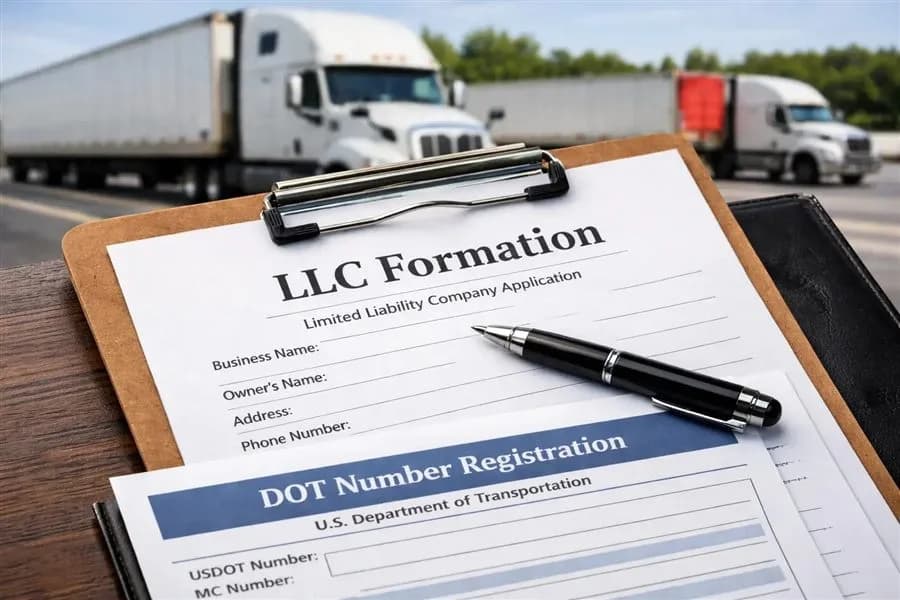
The set-up paperwork a broker collects before they will tender you a load. It is how they record who you are, that you are authorised and insured, who they are legally allowed to pay, and what you both agreed to. Every brokerage calls it something slightly different — carrier packet, onboarding packet, carrier set-up — and they are the same thing.
It is paperwork with a purpose rather than bureaucracy: the broker is on the hook if they tender freight to somebody who turns out not to be insured, and what belongs in a carrier packet is the same list written from their side, if you want to see what they are actually protecting themselves from.
What documents does a carrier packet need?
Six, in almost every case: a signed broker-carrier agreement, a W-9, a certificate of insurance, proof of your operating authority, your payment details, and a notice of assignment if you factor your invoices. Some brokers add a W-9-matched voided cheque, a signed rate confirmation template or a safety questionnaire. None of it should be a surprise twice.
| Document | Where you get it, and the part people get wrong |
|---|---|
| Broker-carrier agreement | They send it. It is a contract, not a form — the one item on this list worth reading properly. See below. |
| W-9 | You fill it out. The name on it must be the legal entity that holds the authority, not your trading name and not your own name if you operate through an LLC. A mismatch here is what delays the first payment. |
| Certificate of insurance | Your insurance agent issues it, not you. Ask them to send it to the broker direct and to name the brokerage as certificate holder. A COI you forward yourself is the one brokers trust least, because that is how forged ones travel. |
| Proof of authority | Your MC/FF certificate from FMCSA. Most brokers check the public record themselves anyway, so this is confirmation rather than evidence. |
| Payment details | Yours, matching the W-9 entity. Once these are on file, treat any later change as a formal thing you initiate by phone — a changed bank detail is the most-abused field in this whole packet. |
How do I fill out a carrier packet?
Assemble the reusable half once and keep it in one folder: W-9, authority letter, notice of assignment, and your agent’s contact details for the COI. Then for each new broker you are only doing three things — reading their agreement, filling in the company-specific fields, and asking your agent to issue a certificate naming them. That turns an evening into fifteen minutes.
- Make the folder. One place, on your phone, with the current year’s documents and nothing expired.
- Use the legal entity name everywhere. Whatever is on the FMCSA record is the name that belongs on the W-9 and the bank details.
- Email your agent the brokerage name and address and ask for the certificate to go to them directly.
- Read the agreement before you sign it, not after the load delivers.
- Keep a signed copy of every agreement. You agreed to different terms with each brokerage and you will not remember which.
What should I check in the broker-carrier agreement?
Four things decide how much that contract can cost you: whether the payment terms match what you were told, how long you have to file a claim or dispute, whether it caps the broker’s liability for freight in your trailer, and whether anything in it binds you beyond the load in front of you. Agreements are negotiable more often than carriers assume, especially the payment terms.
- Payment terms. The agreement is where the real number lives, not the phone call. If quick pay is being offered, the fee belongs here too — quick pay against net 30 is what that choice is actually worth.
- The paperwork window. Many agreements void accessorials, or start the payment clock late, if documents arrive after a set number of days.
- Claims and chargebacks. What they may deduct from your invoice, and whether they can do it without agreeing it with you first.
- Anything that outlives the load. Non-solicitation clauses stopping you working with their customer direct are normal; one with no time limit on it is not.
How do I know the broker is real before I send my documents?
Check them before the packet goes back, not after. Look up the MC number in FMCSA’s public record yourself, confirm the broker authority is active and the bond is on file, and confirm the email domain matches the company you looked up. A carrier packet contains your authority letter, your insurance details and your bank details, which is exactly what an impersonator is collecting.
The rest of those checks, including what to do when a load smells re-brokered, are in how to spot a double-brokered load. What the bond behind a broker does and does not cover is in the freight broker bond.
How long does carrier onboarding take?
Usually same day once your documents are together, and occasionally a few days at a larger brokerage with a separate compliance team. The delay is almost never the broker: it is a certificate of insurance that has to be requested from an agent who is not at their desk, which is why that one is worth setting up before you need it.
A new authority has one extra hurdle: some brokers will not set up a carrier under ninety days old whatever the paperwork says. How owner-operators find loads covers how the first months usually go, and which channels do not have that rule.
The bottom lineBuild the folder once and the packet stops being work. Read the agreement every time, because that part is different at every brokerage — and check who sent it before you send your documents back.
Frequently asked questions
What is a carrier packet?
The set-up paperwork a broker collects before tendering you a load: a broker-carrier agreement, a W-9, a certificate of insurance, proof of authority, payment details, and a notice of assignment if you factor. Some brokerages call it an onboarding packet or carrier set-up; it is the same thing.
How do I fill out a carrier packet as an owner-operator?
Keep the reusable documents in one folder — W-9, authority letter, notice of assignment, your insurance agent’s details — and use the legal entity name from your FMCSA record on all of them. Then per broker you only read their agreement, fill the company-specific fields, and ask your agent to issue a certificate naming that brokerage.
Who sends the certificate of insurance, me or my agent?
Your agent, directly to the broker, with the brokerage named as certificate holder. Brokers trust a certificate that arrives from the insurer far more than one forwarded by the carrier, because forged certificates travel the second way.
Sources
Every figure in this article is linked in place. The full list, for anyone who wants to check the working.
- FMCSA SAFER. The public record where a broker’s authority and operating status are checked.
- FMCSA Licensing and Insurance. Whether the broker bond and the carrier insurance filings are actually on file.
- IRS, About Form W-9. The form itself and the instructions on which name belongs on line 1.