The short version
A double-brokered load happens when a broker or carrier passes freight to a second carrier without the shipper’s knowledge, often to skim the rate or disappear before paying anyone. The clearest signs show up before you dispatch: a rate confirmation that does not match who booked you, pressure to roll immediately, and contact details that do not check out against FMCSA records. Verify the broker first, every time.
You just got a great rate on a load. The broker sounds legitimate, the paperwork looks normal, and you are already thinking about the next lane. Then, three days later, nobody answers the phone, and the check never comes.
That is the ending most carriers picture when they hear "double-brokered load". The truth is messier: double brokering often looks completely normal until the money is already gone. A carrier packet gets forwarded. A rate confirmation gets reissued under a different name. Somewhere in that chain, a broker who never talked to the shipper slipped your truck onto a load they had no right to move.
Industry commentary tracking freight fraud points to a sharp rise in double-brokering complaints over the past few years, and carriers who catch it after delivery are usually the ones left unpaid. The good news: it is catchable early, and it takes less time to verify a load than it does to load it.
What is a double-brokered load?
A double-brokered load happens when a carrier or broker accepts freight from a shipper or another broker, then re-brokers that same load to a different carrier without the shipper’s knowledge or consent. The shipper thinks one company is handling the freight. In reality a second, sometimes third, party is moving it, and often collecting payment along the way.
This is different from a broker subcontracting work they are licensed to do. The problem is not that more than one company touched the load. It is that nobody who actually has a relationship with the shipper knows who is really driving the truck.
Double brokering vs co-brokering
Co-brokering is legal: one licensed broker offers a load to another licensed broker, and everyone involved, including the shipper, agrees to it up front. Double brokering is not legal. It happens without the shipper’s knowledge, often by a party posing as the original carrier or broker.
The line comes down to consent and paperwork. In co-brokering the arrangement is written into the contract, and every party can name who is actually hauling the freight. In double brokering that chain gets deliberately hidden, usually because somebody is trying to collect a rate they did not earn, or disappear before the real carrier gets paid.
7 warning signs you are looking at a double-brokered load
Most double-brokered loads give themselves away before you ever hook up. Watch for these.
- The name on the rate confirmation does not match who called you. If the company name, USDOT number or logo on the paperwork is different from the person you spoke with, stop and ask why.
- Contact only through a personal cell or a free email address. Legitimate brokers use a company domain and a callback number tied to their public record, not a webmail account and a number nobody can trace.
- Pressure to dispatch immediately, with no room to ask questions. A rate that is oddly high, paired with urgency, is a classic setup.
- The shipper’s name does not match your paperwork, or the shipper has never heard of the broker. A quick call to the shipper’s dispatch office settles this fast.
- You are asked to check in under a different company name at pickup or delivery. That is a sign your load has already changed hands once.
- Several people from different companies call about the same load. That usually means it has been re-brokered more than once already.
- The USDOT number does not turn up an active, insured entity. Or the authority is only a few months old with no operating history.
How to verify a broker before you accept the load
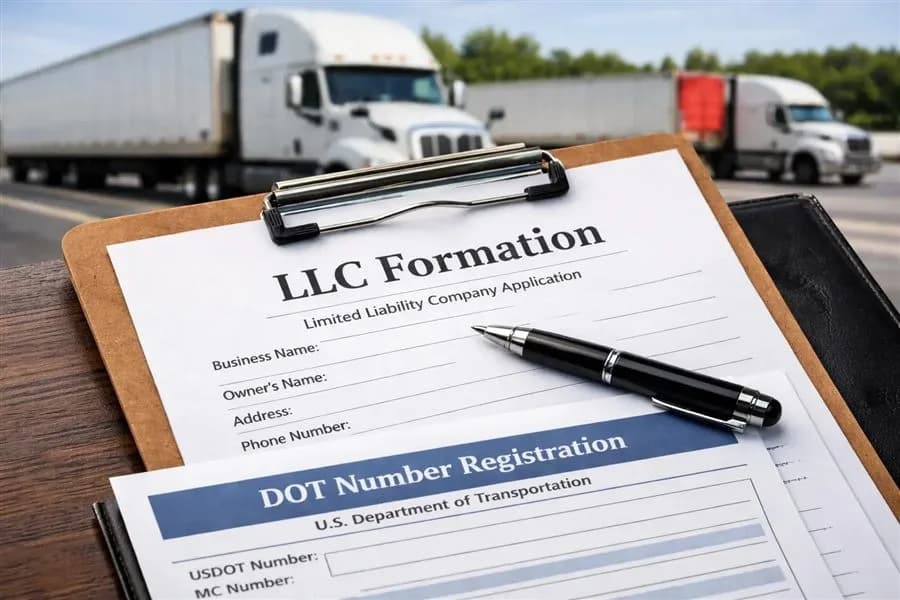
Verifying a broker takes about five minutes: look up their USDOT number on FMCSA’s SAFER system, confirm the authority is active and matches the name on your rate confirmation, then call the broker back on the phone number listed in that public record, not the one they gave you.
One thing changed recently that matters here. FMCSA stopped issuing MC numbers on 1 October 2025, and the USDOT number is now the federal identifier you check. Older brokers still have an MC number sitting in legacy records, so seeing one is not a red flag on its own. Being given only an MC number, with no USDOT number to look up, is worth a second question.
If the callback number rings to somebody who cannot confirm the load, or who does not recognise their own company’s name, do not dispatch. It is also worth a direct call to the shipper’s receiving or dispatch office to confirm they know who is moving their freight. The lookup itself is FMCSA’s SAFER system, and it is free.
On this board that check already happens before a broker can post a single load, because every broker is credit-checked first. That makes the manual habit matter most for loads you find off the board. How the verification works.
What to do if you already hauled one
- Document everything. The rate confirmation, the bill of lading, texts and call logs, and the delivery confirmation.
- File a complaint with FMCSA and report the fraudulent USDOT number. This puts the fake broker on record.
- Contact the shipper directly. They may still owe payment once they understand freight moved outside the broker relationship they agreed to.
- Bring in help if the amount is significant. A factoring company or a transportation attorney can advise on next steps once you have your paperwork together.
Is it illegal, and can you still get paid?
Yes, it is illegal. Operating as a broker without authority, or knowingly re-brokering freight without the shipper’s consent, violates federal transportation law and can carry civil penalties. Despite that, FMCSA has so far declined to create a specific enforcement rule targeting double brokering itself, which is part of why it keeps happening.
Getting paid after the fact is possible but not guaranteed. It usually depends on whether you can prove delivery, whether the shipper is willing to pay a second time, and whether the fraudulent party can even be located. That is exactly why catching it before you dispatch is worth more than fighting it after.
For brokers, the same problem in reverse
If a carrier re-brokers a load you tendered, you can end up paying twice: once to the party you contracted with, and again to settle with the carrier that actually moved the freight and holds the signed bill of lading. The vetting checklist from your side is here.
Lowering the risk
You cannot verify your way out of every bad actor in freight. But you can choose to spend more of your time on a board where the verification already happened. Every carrier here is MC/DOT verified and every broker is credit-checked before their first post, so the loads you see have already cleared a check most boards skip.
That does not replace the habits above. Off-board leads, cold calls and freight from unfamiliar brokers still deserve the same five-minute check every time. But on your own board you are starting from a smaller pool of risk instead of an open phone line.
The bottom lineA double-brokered load almost always shows a crack before it costs you money. Check the USDOT number, call the number FMCSA has on file instead of the one you were given, and treat urgency as a red flag rather than a reason to hurry.
Frequently asked questions
Is double brokering illegal?
Yes. Re-brokering freight without the shipper’s knowledge, or operating as a broker without valid authority, violates federal transportation law and can carry civil penalties. FMCSA has not yet created enforcement rules specific to double brokering, which is part of why it is still common industry-wide.
What is the difference between double brokering and co-brokering?
Co-brokering is legal and happens with the shipper’s knowledge, when one broker arranges for another broker to handle the actual motor carriage. Double brokering happens without that consent, usually because somebody in the chain is trying to collect a rate they did not earn.
How do I report a double-brokered load?
File a complaint with FMCSA and report the fraudulent USDOT number, then notify the shipper directly so they know their freight moved outside the broker relationship they agreed to. Keep your rate confirmation, bill of lading and delivery paperwork ready, since you will need them to support the claim.
Can I still get paid if my load was double-brokered?
It is possible, but not guaranteed. Payment usually depends on proving delivery, the shipper’s willingness to pay twice, and whether the fraudulent party can be located, so documentation from pickup to delivery matters.
How do I check if a broker is legitimate?
Look up their USDOT number on FMCSA’s SAFER system, confirm the authority is active and matches your rate confirmation, then call the phone number listed in that public record instead of the one the broker gave you.
Sources
Every figure in this article is linked in place. The full list, for anyone who wants to check the working.
- FMCSA SAFER System. The official carrier and broker authority lookup.
- Benesch Law. Co-brokering versus double brokering, explained legally.
- FreightWaves. FMCSA retiring MC numbers, effective 1 October 2025.
- Barchart. Freight fraud trend commentary from the brokerage association.
- Truckstop. Warning signs of double brokering.
- Overdrive. Court rulings in double-brokering disputes.
- Trucksafe. FMCSA’s enforcement gap on double brokering.