The short version
A cargo van is the cheapest legal way into freight in the United States. Most vans rated under 10,001 lbs sit outside the federal definition of a commercial motor vehicle, so no CDL, no ELD and no medical card. What you do need is a business entity, commercial insurance a broker will accept, and an honest cost per mile. Expedite van work is quoted as a flat rate for the run, so convert every offer to a per-mile figure before you answer.
A cargo van is the cheapest legal way into freight in the United States, and most people can be running inside a month for the price of the van plus a few thousand dollars.
It is also the segment with the most competition, because the barrier is so low. The operators who last are not the ones with the newest van. They are the ones who know what a mile costs them and say no to everything below it.
Do you need a CDL or a USDOT number for a cargo van?
Usually not, and the reason is weight rather than vehicle type. Federal rules treat a vehicle as a commercial motor vehicle once it is rated at 10,001 lbs or more, so a van under that line needs no CDL, no ELD and no medical card for ordinary freight. Many states require a USDOT number for intrastate operation at lower weights, and many brokers ask for one regardless, so check your own state before you assume.
Check the sticker in your own door jamb before you assume anything. The rated weight is on it, and that one number decides which set of rules you live under. The federal definition is in 49 CFR 390.5.
What counts as a cargo van in freight
Expedite freight moves in three broad sizes, and brokers post them as different equipment types. Knowing which one you are is the difference between seeing loads you can take and loads you cannot.
| Equipment | Typical payload | What changes |
|---|---|---|
| Cargo van | 2,000 to 3,500 lbs | Standard-roof Transit, ProMaster, Express. Three or four pallets depending on how it is racked. |
| Sprinter van | Similar, more cube | High roof, extended length. Most expedite freight is posted for this because a driver can stand up inside it. |
| Box truck | 5,000 lbs and up | Past 10,000 lbs you are a commercial motor vehicle; past 26,000 lbs you need a CDL. Different rules, different insurance, different money. |
If you want to see the split in practice, the cargo van board and the box truck board post very different freight on the same lanes.
The paperwork, in the order it has to happen
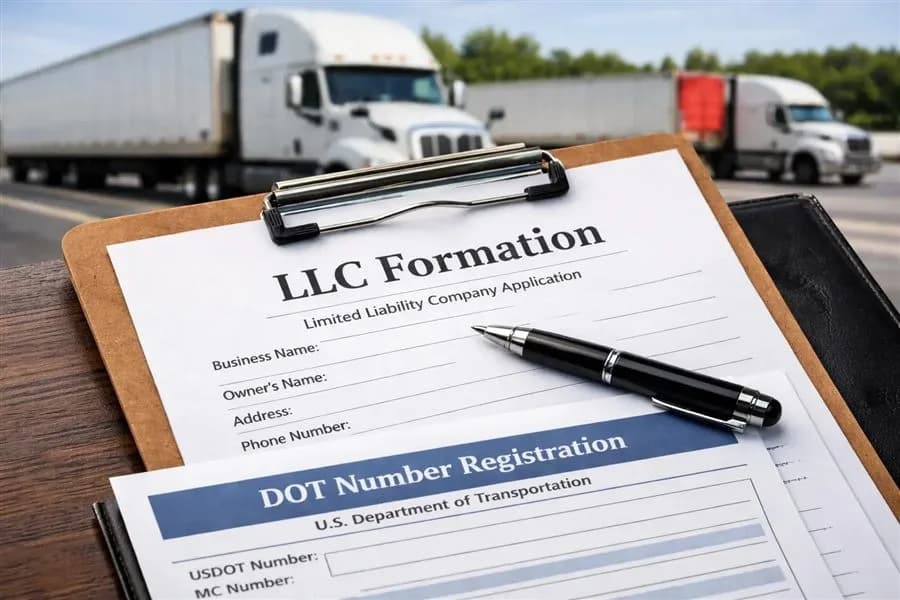
- Form the business. An LLC in your home state, then an EIN from the IRS, which is free and issued the same session. Open the business bank account before the first load pays, not after.
- Decide whether you need a USDOT number. Federally it is tied to weight. Many states require one for intrastate operation at lower weights, so check yours as well as the federal rule. Registering when you do not have to is not harmful, and some brokers will not set you up without one.
- Buy the insurance brokers actually ask for. Commercial auto liability, and $1,000,000 is the number most broker packets specify, plus cargo coverage, commonly $100,000, and often general liability. Get the certificate issued in the name of the business, not your own.
- Set up your broker packets. Each brokerage wants a W-9, a certificate of insurance, a signed carrier agreement and your banking or factoring details. Do this before you find a load you want, because the first packet takes a day and the load will not wait.
- Equip the van. Load bars, ratchet straps, moving blankets, a hand truck, a pallet jack if you run a liftgate, and PPE. Ports and some plants want a TWIC card. Keep a lumper float, because you will be asked to pay one before anyone reimburses you.
What does a cargo van run actually pay?
Van freight is usually quoted as a flat, all-in rate for the run rather than a rate per mile, which makes it easy to say yes to a big-sounding number and lose money on it. Convert every offer to the same unit before you answer: total rate divided by total miles, including the miles you drive empty to reach the pickup.
Then compare that against your own cost per mile, which is the only number that makes a rate good or bad. It has two halves.
- Fixed costs, insurance, the van payment, permits, phone, accounting. They are the same whether you run 2,000 miles this month or none, so divide the monthly total by the miles you realistically run.
- Variable costs, fuel, tyres, maintenance, tolls, parking. Track fuel from your own receipts rather than from the window sticker; a loaded van in city traffic does not return what the brochure claims.
A worked example, with figures you should replace with your own. Say your fixed costs come to $1,800 a month and you run 6,000 miles: that is $0.30 a mile before you turn a wheel. If fuel, tyres and maintenance run $0.35 a mile, your break-even is $0.65 a mile, and that is before you have paid yourself or set aside tax. A 300-mile run with 60 miles of deadhead is 360 miles against that number, so a $400 offer is $1.11 a mile all-in, not $1.33.
Work out your own break-even once and price against it every time. The rate calculator does the arithmetic above if you would rather not keep a spreadsheet.
The mistakes that end van businesses
- Chasing the headline rate. A long run into a market with no freight coming out costs you the deadhead home. Check what is posted out of the delivery city before you accept the load in.
- Skipping the broker check. Confirm the authority and payment history of anyone you have not hauled for. A load you never get paid for is worse than a load you never took.
- Deferring maintenance. A van is a light-duty vehicle doing heavy-duty mileage. Budget for it from the first load rather than meeting it as an emergency.
- No tax reserve. You are self-employed. Set money aside every week for quarterly estimated payments and self-employment tax, and keep a mileage log from day one.
The bottom lineThe van is the cheap part. Know your cost per mile, count the empty miles, and check what is coming out of the delivery market before you accept the load going in.
Frequently asked questions
Do I need a CDL to drive a cargo van for freight?
No. A commercial driver licence is tied to weight, and a cargo van rated under 10,001 lbs is well below the threshold. You still need a valid driver licence, commercial insurance, and in most cases a business entity that brokers can set up in their system.
Do I need a USDOT number for a cargo van?
Federally, only if the vehicle is rated at 10,001 lbs or more in interstate commerce. Many states require a USDOT number for intrastate operation at lower weights, and many brokers ask for one regardless, so check your own state before you assume you are exempt.
How much insurance do brokers require for a cargo van?
Most broker packets specify $1,000,000 in commercial auto liability and $100,000 in cargo coverage, and many also ask for general liability. The certificate has to be issued in the name of your business, not your own name.
What does a cargo van load pay?
Expedite van freight is normally quoted as a flat all-in rate for the run rather than a rate per mile, and it varies with the lane, the urgency and the capacity sitting in that market. The useful number is the rate divided by every mile you drive, including the empty ones, compared against your own cost per mile.
Is a sprinter van better than a cargo van for freight?
A high-roof sprinter carries more cube and lets a driver stand up inside, and more expedite freight is posted for it. It costs more to buy and run, so the question is whether the extra freight it opens up on your lanes covers the difference.
Sources
Every figure in this article is linked in place. The full list, for anyone who wants to check the working.
- eCFR, 49 CFR 390.5. The federal definition of a commercial motor vehicle, including the weight threshold.
- FMCSA registration. Who needs a USDOT number and how to apply for one.
- IRS, get an Employer Identification Number. Free, and issued in the same session.